

Creative Engagement Newsletter – 09
Here comes The Buzz, our snazzy way of sharing industry updates,
top tips and team news. We hope you enjoy the read 
A note from Vicky Edwards
Earlier this quarter we took the plunge and made an official change to our team name. For a while we’d been considering whether our name truly reflected what we do. With the move to MMB, it seemed like the perfect time to make a change.
Increasingly we don’t just communicate to employees, we engage employees with their benefits drawing on inspiration and learnings from the worlds of business change, psychology, marketing, advertising and more. Our team name should reflect this innovative and creative approach as well as differentiating us from our competitors in marketplace and internal communications teams.
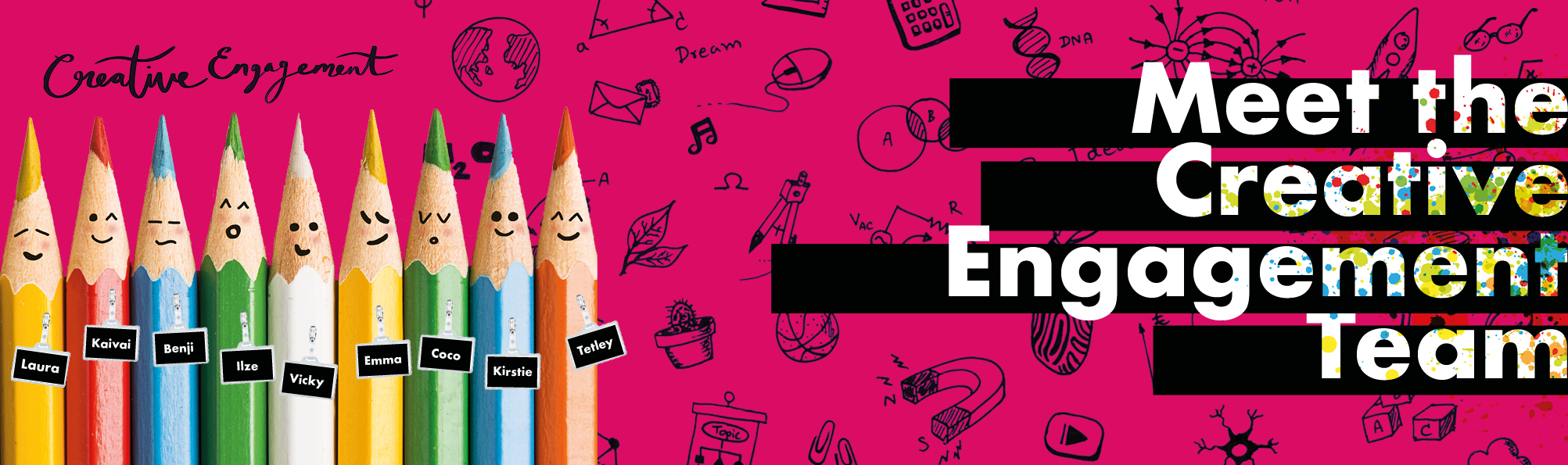
With this in mind, say so long to ‘Communications Team’ and hello to…
 You may have noticed that that our email signatures have changed recently and we are fully embracing the new name. Our roles and responsibilities are the same but as an example, my job title is Head of Creative Engagement, a Consultant job title is ‘Consultant, Creative Engagement’.
We hope you understand the reasoning behind the change and are as excited as we are for our future at Creative Engagement! As usual, if you have any questions about what we’re currently cooking up in the creative kitchen or have a client that needs our help, please don’t hesitate to email creativeengagement@thomsons.com or pop into the Sky Garden.
Print vs Digital –
From battling mediums to best friends
The way we consume and demand information has undergone a profound change. With the desire to be more eco-friendly and digital media being the main source for fast information gathering, it feels like printed communications have passed their prime. It’s no surprise that our professional mantra with clients has become “digital first”.
Distributing information digitally is the fastest and most accessible way to reach your target audience. An e-mail arrives in our inbox at exactly the moment the sender intends it to. The content can be scaled up, down, read back to us or adjusted however we need it to be. However, digital isn’t always enough when it comes to benefit communications.
This is because not all target audiences are as digitally empowered as the average office employee. We have also been working with more clients that have not yet discovered the joy of Darwin. So how do you engage with your tricky-to-reach audiences?
Printed communications is the answer but more recently, with an eco-friendly twist. We’ve used fully recycled materials to create giveaway items and jazzed up postcards with seeded paper that grows into fresh herbs or beautiful wildflowers.
Where ‘digital first’ isn’t the right solution, we encourage our clients to capitalise on the power of home mailers. After all, benefit decisions are often considered in the comfort of the home, discussed with partners.
Let’s have a quick look at what makes print materials so effective.
People like engaging with print materials
Tactile print media is ingrained our collective memory. People continue to be attracted to and willing to read print media, whether it be newspapers, magazines, leaflets or novels. Printed materials remain a very persuasive medium, which have taken a considerable time to produce, making it a stronger source of messaging.
Print stimulates more senses
One exclusive quality that print has is its tangibility. Readers are able to browse through a printed brochure, feel the paper and even distinguish between certain paper densities and compositions.
Tangible materials make readers pay more attention because they have to actively engage with printed content to read it – they have to pick up the material and hold it. With digital content, they can passively scroll through it, without having to focus too hard.
Each channel as their own advantages
How we get the latest news is a perfect example. Newspapers attract their readers through impartially written news and information. Though digital news is also widely consumed, the two mediums different roles. Online sources are used to keep up to date with the latest headlines, whereas newspapers are the space for in-depth reporting, satire and analysis.
Print can truly captivate readers
Print offers a truly uninterrupted reading experience. This means there are no distractions for a reader that is committed to finishing an article, such as advertisements, auto-playing videos or pop-ups taking up the spotlight.
When a reader’s full attention is on that specific content, this guarantees greater engagement with the content since they are more likely to be impacted by it and remember it long-term.
What does science have to say about this?
Neuroscience Marketing completed a study on the effectiveness of advertising in both digital and print mediums. Here are some key takeaways:
• Digital ads were processed more quickly.
• Paper ads engaged viewers for more time.
• Subjects reported no preference for either medium.
• Subjects absorbed about the same amount of information from both media.
• A week later, subjects showed greater emotional response and memory for physical media ads.
• Physical ads caused more activity in brain areas associated with value and desire.
What does it all mean?
We have so many options at our disposal that choosing the right starting point can seem like a daunting task. Selecting the right tools depends upon on the target audience, their location and the communications goals.
The most effective communications strategy is likely to involve a mixture of digital and printed materials working hand-in-hand to strengthen the key messaging and provide the right information, at the right time and in the right environment.
The road to effective, engaging communications starts with asking the right questions. We love a challenge and can help our clients find what works best for them. Come and speak to us about your tricky communications goals and we will put our brains together to solve it with you!
Illustrative vs Photographic Branding
Clients often shy away from illustration, worried that their brand will be considered childish, or not capture real life. But this isn’t all that illustration has to offer. Illustration is an infinitely variable, emotive, inclusive and adaptive tool for branding. When our clients choose to use this often-overlooked tool they are never less than amazed by the results.
Variable
There is more than one style of illustration. In some instances, you see illustration employed to give a brand heart and make it seem friendlier. But an illustrated brand can also be modern, with clean lines and lots of negative space. There are many more styles than you might think.
Emotive
Through visual metaphor the figures in an illustration can express more than is possible in real life. Is a character in a bad place? Try surrounding their head with dark clouds. Are your characters falling in love? Give them hearts for eyes. There are visual shortcuts we can take to communicate complex concepts quickly and efficiently. And there is always the option of using colour to give the impression of a certain mood or feeling.
Inclusive
It can be difficult to find the one piece of lifestyle photography that perfectly represents employees enjoying their benefits. When we find a piece with the right feeling, it may only depict a limited range of people. On the flip side, we may find a diverse photo but it feels forced or staged. Abstract illustration can be utilised to represent a very diverse staff in terms of age, race and gender.
Adaptive
Arguably the best thing about illustration is its adaptability. If clients are leaning towards an illustrative brand option but wish it could be changed a little, this is possible in a way that it simply isn’t with photography. The reason designers jump at the chance to work with illustration is control. Since the designer can create every aspect of the illustration, it becomes easier to communicate, and good communication is good design.
So, why not consider illustration for your next rebrand? The possibilities are endless…
Consulting Collaboration –
Welcome to the new Health Hub!
That’s right, Creative Engagement and Health & Wellbeing have been up to something special. Earlier this year, Laura (CE) spoke with Ben (H&WB) about the work Creative Engagement do in encouraging employees to become more emotionally attached to their benefits. It became apparent that The Health Hub, a key part of the Health & Wellbeing consulting proposition, needed a revamp to make it more emotive and less clinical. We decided to collaborate on this refresh, to ensure not only that employees feel supported in all aspects of their health but also to give them a resource for more information on whatever it is that is affecting them.
Why did the Health Hub need a new look and feel?
Ben – The old health hub meant different things to different clients. It had a lot of great information on it but was inconsistent from site to site. We wanted to ensure we had a structure in place that could help us show clients how to use the tool effectively. Working with Creative Engagement meant we could deliver a fresh and engaging brand that would drive better health engagement and deliver the right outcomes.
How does the new platform differ from the old?
Laura – I think the biggest difference is the branding. We have created a look and feel that is vibrant, engaging and visually consistent. The branding will sit on Darwin as well as transferring over to any other collateral the Health Hub provides.
Ben – The new platform looks to provide a focal point for a client’s Health & Wellbeing strategy. The aim is to provide all the information, resources and support a client offers their employees, covering all areas across cancer, mental health, heart health and muscle & joint. This is a big improvement from the old site, which hosted a variety of health information in a non-structured way.
What will this mean for our clients and their user experience?
Ben – It will enable our clients to direct employees through the Health Hub and display all the support services they offer across their key Health & Wellbeing pillars. It will also be a great tool for managers & HR when signposting employees to the various levels of support that are available through the company, along with any charitable and national services available.
Laura – We are hoping this will provide employees with a “go-to” place for Health & Wellbeing information, helping them to understand how their benefits work and how they can be used in a simple and clear format.
What does this mean for the employees of our clients?
Ben – This will be a step change for employees, where they currently have to understand how each benefit works before they know how it can support them. With the new design they will be able to view all support services available to them based on where they need help, support or just a bit of guidance.
Talk to me about collaborating between the H&WB team and Creative Engagement…
Ben – What can I say? Laura and Ben H were amazing! It was great to work with a creative team on something that has been so traditional before. It has brought to light how we define the user experience, how the design of the site impacts engagement and how to pitch the wording to engage our audience. I feel because of the work the team put in, we have designed something that is really engaging and is going to get clients and employees raving about the Hub!
Any more collaborations coming up?
Ben – Hopefully, we have some unfinished business with the newsletter/webinar side of the Health Hub and I’m sure you will see something coming soon on this. It’s been great to work more closely with the team and hopefully we can help with our Health & Wellbeing knowledge for Creative Engagement next time!
Three takeaways to make the most of Darwin
The summer months certainly weren’t quiet for Creative Engagement. We found ourselves running more and more ‘Maximising Darwin’ workshops; walking and talking our clients through what can be done to get the most out of Darwin as a powerful communications tool.
In these workshops, we help clients get a better understanding of how Darwin can work as part of their engagement strategy, share examples of best practice, generate ideas and give them actionable tips and tricks. Here are a few key takeaways:
Put yourself in your employees’ shoes
When it comes to effective engagement, a little empathy can go a long way. Take a moment to consider what’s relevant and interesting to your employees and put that stuff front and centre. Then you can surround those things with the information they absolutely need to know.
Tell a story with your TRS
The Total Reward Statement is a great place to highlight why a business offers the benefits they do and how the offer can help their people. Employees are already there, looking in to their bottom line so it’s best practice to add text and image cards to supplement the raw data with a compelling story.
Change things up
It’s so important to change the content on the site regularly. Heaps of our clients still had the same content on their site as the day they launched – only updating out of date PDFs!
To help this along, we’ve introduced content calendars so clients can plan their content ahead of time, switching up what’s on the site to suit whatever’s happening in and outside the business.
As an example, Samsung run a financial awareness campaign every October, so we’ve made specially designed homepage images and free panel images just for the occasion. DP World also update their site every month with relevant news and events.
Talk to us
If your clients are looking to increase engagement, a Maximising Darwin workshop is a great first step. Feel free to get in touch with us if you have any questions – we’re always happy to hear from you – but maybe after peak!
The Buzz Banter
Eek, it’s peak – again! “Where has this year gone?” is the main topic of conversation over coffee-breaks in the Sky Garden at the moment. It’s been a busy time for Creative Engagement since our last Buzz. We’ve lost a member of the gang and gained a new face. While we were all sad to see Jae Kerridge go, we wish her the best in her new venture! We’d also like to invite everyone to wish Costanza De Luca, our new Associate Designer, a warm welcome to Thomsons and MMB.
Now we are creeping into our business-wide famously busy period (stay strong everyone!), it can be hard to fit in some quality team time. Luckily, we had the chance to visit the Beefeater Distillery and try our hand at being professional gin tasters. It is a job that most of us didn’t realise we had already been doing for quite a few years!
We learnt some interesting facts on the tour. Did you know that gin isn’t actually made from juniper berries? It is one of the 3 main ingredients though – the liquor cannot be considered gin if the clear spirit isn’t distilled with juniper. Beefeater uses 9 botanicals in its classic London Gin, but there are a few variations on this using different botanicals or distilling times.
In true Buzz Banter interview style, here’s a sneak peek into how our night went:
What was your favourite gin out of the gins we tried at Team Time and why?
Kirstie – I liked Monday’s gin – it’s distilled for longer so the flavour was really lovely.
Tetley – I liked the blood orange gin – tasted like one of my five a day!
Costanza – My favourite gin was Beefeater London Garden, it has a strong flavour and yet, I had the feeling the botanicals were blooming delicately in the mouth.
Laura – Definitely the Beefeater Monday Gin, it was so smooth and you could really taste the botanicals in it.
What do you like most about spending time with the other consulting teams at Team Time?
Kirstie – Team Time is great for a proper catch-up with other consulting bunnies. I had lots of chat with pensions this time around which we don’t often get to have.
Emma – We spend more time at work than anywhere else throughout the week – it’s important that not only can we unwind around each other but become real friends too. Team Time helps this happen!
Tetley – It’s a nice opportunity to talk about any collaborative work we’ve been doing recently across the teams – especially to receive positive feedback on my work!
Costanza – I enjoyed spending time with the rest of the team. Some recreational time together, knowing each other better and see your colleagues under a new light.
Laura – It’s always fun to socialise with the other teams, and it feels like we are out as a group of friends rather than colleagues.
Did you learn anything interesting about another team member after a couple of drinks?
Kirstie – Not that I can share 😊
Tetley – I learnt that Kirstie goes to bed as early as me! It seems that neither of us are night owls, we let Emma and Laura represent the team late into the night.
Emma: Costanza and I have a mutual love for over the top earrings!
That’s it – we hope you’ve enjoyed finding out a little bit more about Creative Engagement. We’ll see you next time for our festive issue!
Thanks for reading!
Remember, if you have any thoughts…
Love, Creative Engagement 😉