

Comms Team Newsletter – 06
Here comes The Buzz, our snazzy way of sharing industry updates, top tips and team news.
We hope you enjoy the read 🙂
What can communications learn from legendary Christmas adverts?
Whether we like it or not, last month we were all on the edge of our seats waiting for the release of the infamous John Lewis Christmas campaign. Viewers tuned in to see if Elton John’s passage of time, accompanied by ‘Your Song’, would evoke enough emotion for us to shed a tear like 2014’s ‘Monty the Penguin’.
But why are we so hooked on these emotional ad campaigns? Is it because it’s Christmas or is it something deeper? It seems emotional intelligence has a significant impact on our buying power and this is something we can apply to our benefits communications too.

The common theme between what the Thomsons Communications Team achieves, and what big brands like John Lewis and Coca-Cola do so well, is knowing that an emotional response to a campaign has far greater influence over a consumer’s intent to buy or invest, than the actual content. This doesn’t mean that the content isn’t important, but it’s the emotional hook that gets people to think about how this product will change their lives positively.
So why is emotion so important to a successful campaign? Well, according to advertising and marketing publication, AdAge, ‘emotional campaigns are almost twice as likely to generate large profit gains as rational ones’. Keeping your audience engaged by taking them on an emotional journey has become vital for brands who are looking to boost their presence and maintain their place in a competitive market. A study taken from ‘The Heart of Change’ by Jon Kotter and Dan Cohen, found that when getting people to change their behaviour they are more inclined to ‘see, feel, change’ rather than ‘analyse, think, change’. To change behaviour people need direction and instruction, but it’s the emotional brain that gets things done.
Playing on common themes such as pride, love, achievement, empathy, loneliness or friendship and memories, is all part and parcel of tapping into the psyche of your target audience and helps us tell an emotive story. Storytelling on an emotional level is a fundamental part of human communication. From an organisational point of view, it can improve the employee experience and increase productivity.
Here in the comms team we use this information to encourage employees to think differently about the benefits on offer to them, and focus on inspiring new behaviours when it comes to selecting benefits. A great example from 2018, is the work we have completed with Rolls Royce.
From the outset, Rolls Royce made it clear to the team that their employees were at the forefront of their brand with a strong EVP (employee value proposition). The goal was to transform their benefits portal with a total rebrand to mirror their employee driven culture. We focused the new brand around employee submitted photos across the site, digital and printed collateral. This added a really personal touch, to help employees feel connected to the brand and to the organisation.
Another way we implemented this ideology was through the tone of voice within the deliverables. Each benefit has a tagline that helps the employee understand the offerings with a warm and thought provoking tone: ‘Employee Assistance Programme – Because you don’t always have the all answers.’ The ‘Because’ statement describes benefit, and acts as an emotional hook encouraging the employee to think about their relationship with that particular benefit.
By taking influence from Christmas advertising and applying the same theory to our own work, we move progressively towards changing people’s attitude to their benefits, for good.

Idioms: The bees-knees or a load of codswallop?
Every language has a few phrases that don’t translate that well, and British-English has some absolute belters.
When it comes to writing innovative and fun communication pieces for our clients, we always look for new ideas to keep the important messages engaging and strong. The key to great copywriting is using language that is informative, instructive, distinctive and persuasive – all at once.
One of the linguistic devices we use to attract people’s attention is idioms. Idioms are fixed expressions that are typically used in a figurative sense. For example, telling your colleague that you made a real dog’s dinner out of that DIY flat pack from Ikea last weekend doesn’t mean you spilled the Pedigree Chum all over the place, but that the finished result was a total mess.
We like to use British idioms, common phrases and colloquialisms because they are familiar to a UK audience and they add an element of humour to the message. Rather than using only literal, logical words and phrases, we choose to use expressions that paint pictures in our mind, creating richer and more robust communications. We often think about the question “what makes an idea sticky?” Whimsical, eye-catching comms are often more memorable and as a result, more ‘sticky’.
The use of idioms can present a challenge, especially when we are targeting an audience whose primary language may not be English, or the phrase itself isn’t relatable to all. The meaning could be completely lost, rendering the message unclear. While Brits tend to be au fait with taking the biscuit, beating around the bush and being absolutely Hank Marvin, we shouldn’t assume that our audience will have a dictionary of British idioms mentally stored. Unfamiliar idioms can result in the wrong understanding of the metaphorical meaning and ultimately undermine the effectiveness of the message.
So we find ourselves in a balancing act. Some briefs simply don’t call for the over-use of idioms and slang phrases i.e. “simple, friendly and plain English”. But when we’re asked to be “funny, witty and fresh”, idioms are a first port of call.
When writing this article, it became clear that colloquial phrases naturally slip into almost every sentence. While this might be the right tone for us, it won’t be for every client. We flex our tone to suit the brief, the audience and the company culture at hand. These elements will always differ from client to client, and so will the copy we write. In doing this, we hit the nail on the head and create great, individual comms.
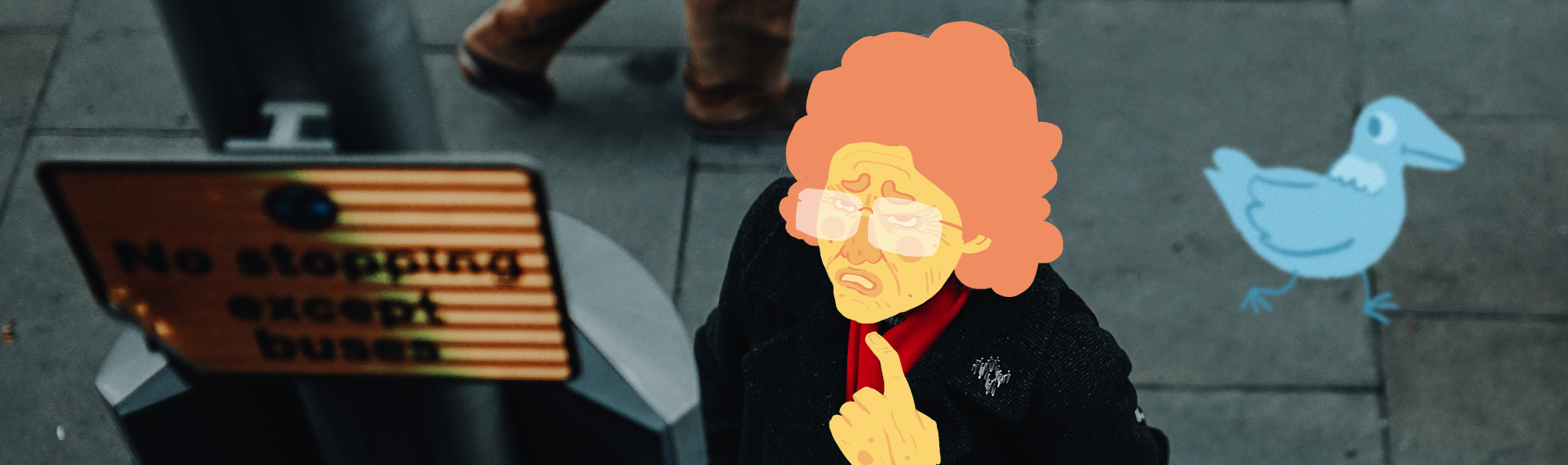
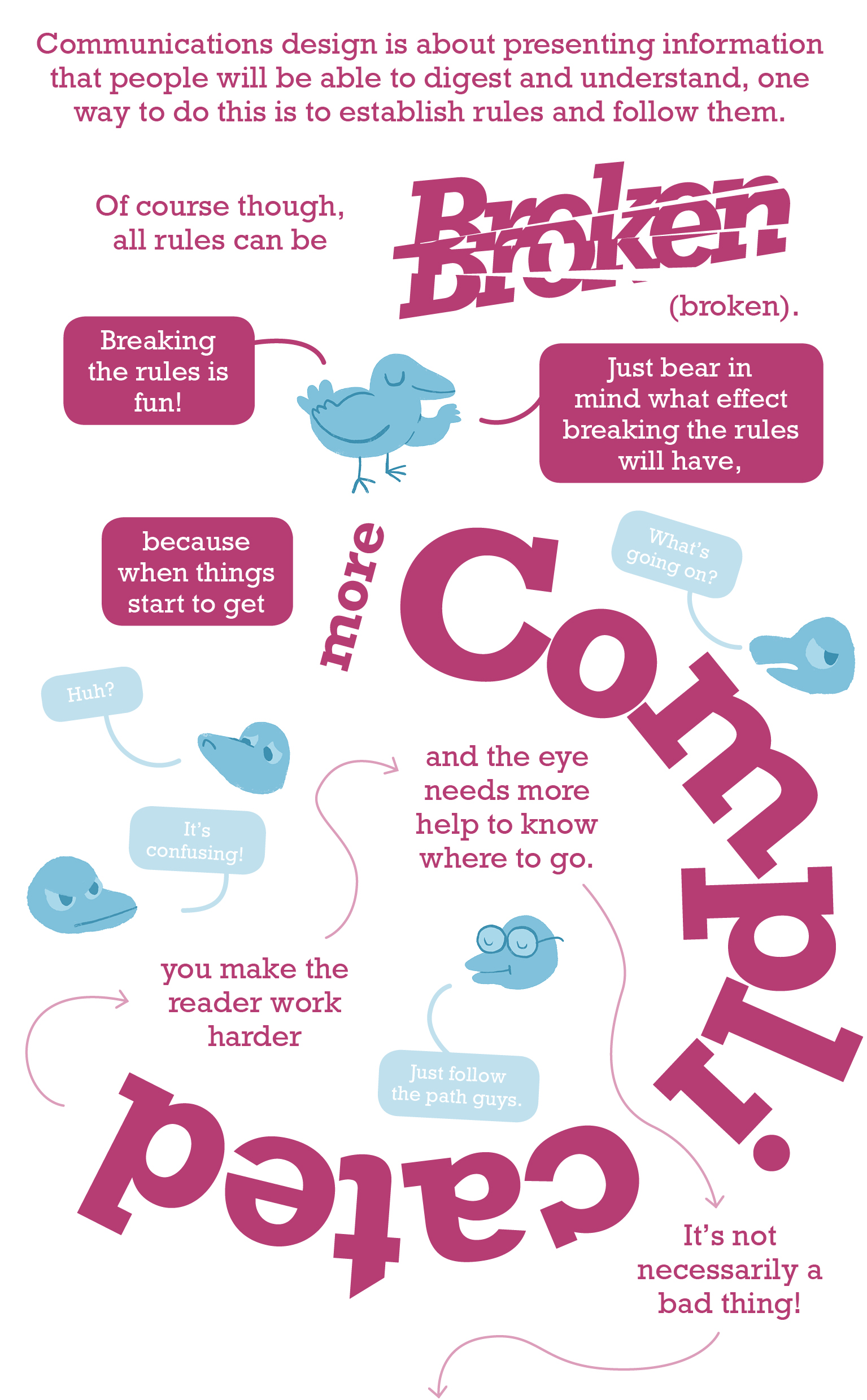
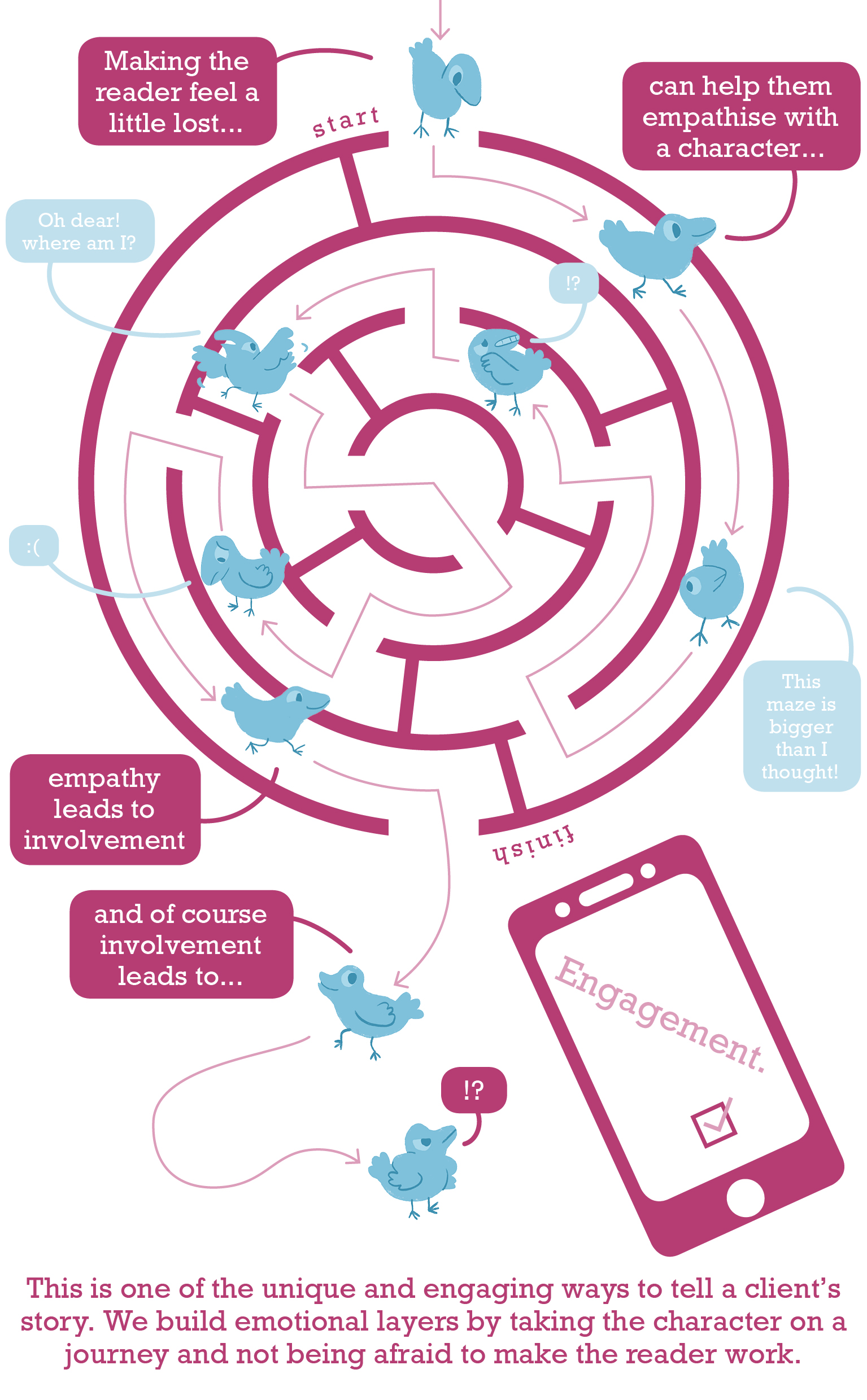
Making your readers work

Connect London: Review
In November, the comms team ventured out to Connect London, at the Old Truman Brewery on Brick Lane. The event brands itself as ‘The New Creative Festival in Town’ and focuses on bringing together insight, inspiration and thought-provoking conversation, encouraging revellers to ‘be challenged to not only think differently, but do differently’.
Over the two days, different members of our team attended interesting talks led by industry professionals. Here, we share what we learnt and what we can apply to our day-to-day thought process:
Unlock your creative superpowers by making! – By Laura Jordan Bambach, Chief Creative Officer for Mr. President
One of the challenges we have is being creative on command. Sometimes you’re just not feeling it and creative inspiration is tricky to come by. This means we’re always looking for new ways to unlock ideas when we are tackling a client’s comms challenge. Laura suggested some innovative ideas which we can use to think differently about our approach to a
new brief:
- Look Up – Take your eyes from the brief for a moment and think about your audience, the key messages and the community you’re
speaking to. - Cut Ups and Mash Ups – Cut up and reorder the brief. Pull random words out of a hat. Create new sentences with the cut up words and see if this sparks new ideas.
- User Perspective – Think about how you would need to adapt your idea – for example if your target audience is city dwelling millennials, consider how you would change this idea for a 60 year old man from a remote town. What methods of communication would you have to change to connect to him?
- Collaboration – In groups we took a pack of photo cards and had a brief in front of us. We discussed initial ideas and then selected a random photo card to see what idea tangent it sent us down.
Combining art and science to create truly great marketing experiences – By Luke Judge, CEO of NMPi
DarwinTM gives us access to a wealth of data. This talk gave some great pointers on how to use data to tap into the psychology of our audiences. Luke led us on a journey from ‘I wonder?’ to ‘I do!’ in these 6 simple steps:
1 – Use data in digital marketing to make an emotional connection. We can do this by reading what benefits are engaging people the most and drawn on ideas from there.
2 – Create a feeling of excitement and tell a story that stirs emotion – #FOMO
3 – Dating – the search. Here we can use the plethora of data available to establish how to target our comms for specific audiences.
4 – Sizzle – First date. This is where we start putting our ideas into practice and showing our offers in their natural environment, ensuring they appeal to the right audience and convert their interest.
5 – Engaged – While our comms are designed with data in mind, we still need to ensure the message is reliable, trustworthy and honest.
6 – “I do!” – Finally, we need to be sure to keep the employee and benefit offering relationship strong and committed.
Using the data from DarwinTM we have developed an emotive and well-thought out campaign that employees can have confidence in.
From a communications perspective, in both copy and design, attending the event proved to be fruitful in changing the way we think about our strategy and brainstorming technique going into the New Year, leaving us loaded with key knowledge for 2019 trends.

The Buzz Banter
Festive cheer is all around us in the Sky Garden. The decorations are up, presents for the Salvation Army collection are under the tree and we’re getting in the mood for our secret consulting Christmas outing.
We may be a small team, but Comms is rich with different cultures and nationalities. Ever in the pursuit to learn more about each other, we hunkered down with a cup of tea to chat about how we each do the holidays and shared some favourite festive anecdotes. So sit back and enjoy learning about our different traditions – and however you’re spending the holidays, we hope you have a great one!
Ilze on Christmas at home in Latvia:
“In Latvia NYE is a more universally enjoyed festive event than Christmas. We get some fresh air, finish our traditional hike by early afternoon and have a BBQ in the snow before it gets dark. It’s everyone’s chance to make an effort and bring along some homemade wine or a funky hat too!”
Laura on a traditional village Boxing Day:
“Boxing Day is a big tradition where I’m from, with around 1000 vintage and modern motorbikes descending on our small Kentish village. Grab a hog roast and a beer and marvel at the sights and sounds of bikers from far and wide!”
Jae’s alternative December 25th:
“My family doesn’t celebrate Christmas, so December 25th is a nice family day where we have the fire on, watch lots of TV, play with my niece and nephew and eat as much food as we can. It’s basically a day where A LOT of sofa naps happen!”
Tetley’s roast potato relief:
“I go to around four Christmas dinners with different family members, and one of these always forgets I’m vegetarian! I usually end up with a Chinese takeaway instead, which is a nice break from roast potatoes.”
Kirstie on carol singing:
“I always go carol singing on Christmas Eve at a local village with the choir I sing with. Really helps me get in the festive spirit (the mince pies and mulled wine we get as payment helps too!)”
Kaivai on his sunny day:
Christmas in New Zealand involves a huge feast where every family brings something to eat with heaps of Cook Island dishes like ika mata, varao’a karo, poke meika, all dishes involving a lot of coconut cream!
The sun would be shining and my uncles would be playing music and nursing their beers. We would be exchanging water balloons and trying to hide from the next watery attack! It’s slightly different now but the core ingredients are still there. Family, food and fun!
And that’s it! We hope this column helps you get to know our team a little better, and that you have enjoyed the festive edition of The Buzz Banter. You can find out more about each of us and what we do by visiting our Comms Team page here.
Until next time…
Thanks for reading!
Remember, if you have any thoughts…
Love, The Comms Team 😉